
Centralize customer insights and build a unified voice of the customer with Timebook


Product managers today are surrounded by customer feedback. Every week brings new insights from user interviews, support tickets, sales calls, surveys, and analytics dashboards. Yet despite this abundance of information, many PMs still struggle to answer a deceptively simple question: what do our customers actually want most right now?
The issue isn’t a lack of feedback, it’s fragmentation. Customer insights are scattered across tools and teams, making it difficult to form a coherent picture of user needs. Without a centralized approach, product decisions risk being driven by anecdotes, recency bias, or internal opinions rather than a true voice of the customer.
This is why modern customer insight platforms have become essential for product-led organizations, to enable PMs to centralize product insights and turn customer feedback into strategic advantage.
Most product teams collect feedback continuously, but few have a reliable way to synthesize it at scale. Support teams log issues in ticketing systems. Sales teams capture objections in CRMs. Product managers conduct interviews and jot down notes in documents that rarely get revisited. Over time, valuable insights become buried, duplicated, or forgotten entirely.
This fragmentation creates real problems. PMs struggle to identify recurring themes across customer segments. Leadership lacks confidence that roadmap decisions reflect actual customer demand. Teams debate priorities without shared evidence, slowing execution and eroding trust.
Without centralized product insights, even the most customer-focused teams end up reacting instead of learning.
A unified voice of the customer is not just a report or a dashboard. It’s a shared understanding that permeates product strategy, design decisions, and execution. When customer insights are centralized and continuously updated, product teams gain clarity on what truly matters.
Instead of asking which stakeholder is right, teams can ask what customers are consistently telling them. Instead of relying on intuition, PMs can ground decisions in real evidence. Over time, this alignment compounds, leading to better prioritization, faster delivery, and stronger customer outcomes.
This is the promise of effective customer feedback analysis software, but only if it’s designed for how product teams actually work.
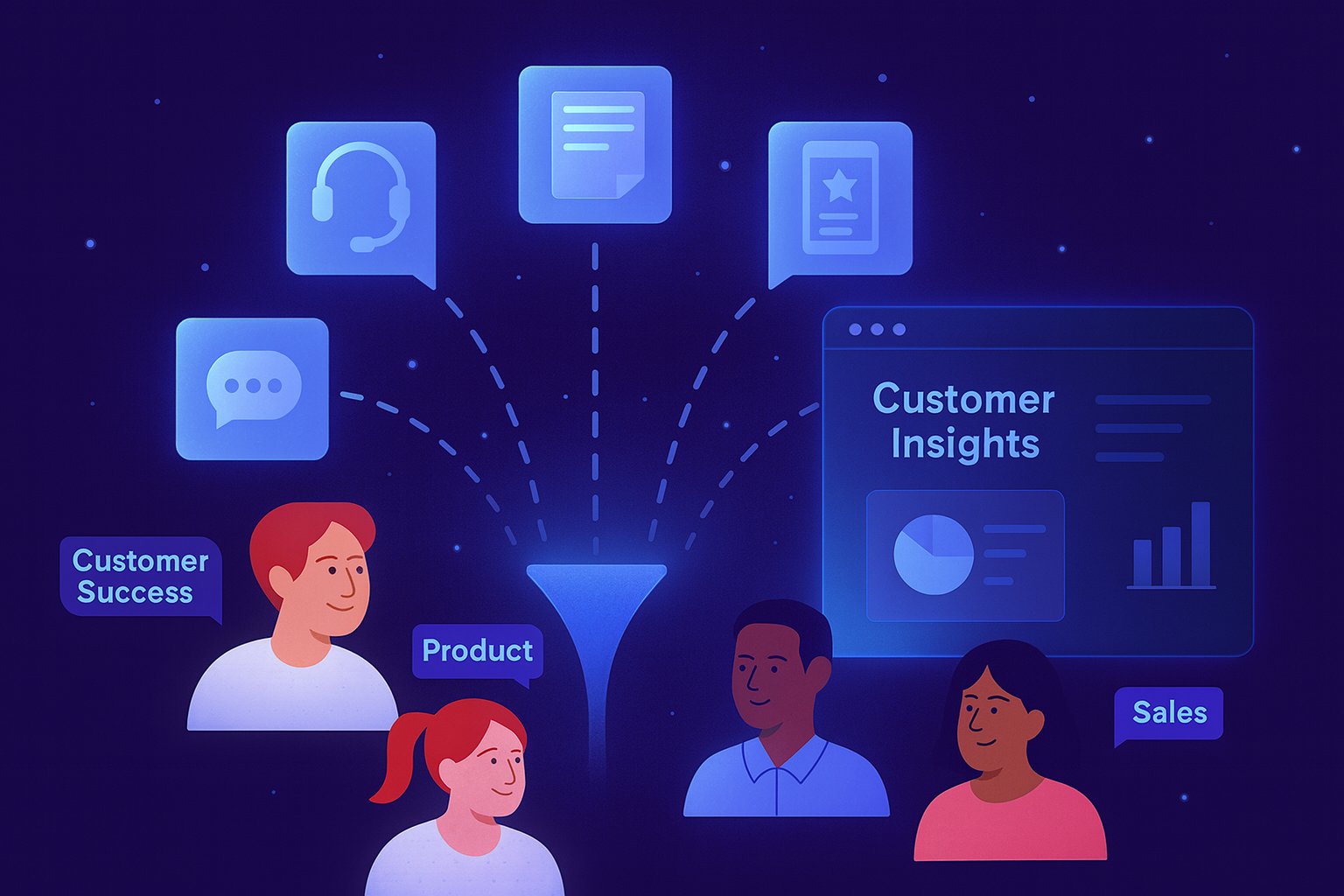
Many existing customer insight platforms focus heavily on surveys, tagging systems, and manual workflows. While some tools offer value in specific contexts, they often require significant setup and ongoing maintenance. Insights can become stale, overly abstracted, or disconnected from the conversations where real understanding emerges.
Most importantly, these platforms tend to treat customer feedback as static data rather than living context. Qualitative insights from calls and meetings, the moments where customers explain why they feel a certain way, are often underutilized or excluded entirely.
For PMs who spend much of their time talking to customers, this creates a gap between insight collection and insight application.
Instead of asking PMs to adapt to rigid workflows, it would be better if a tool could capture insights directly from the conversations teams are already having. Every customer interaction becomes a source of structured learning, automatically transformed into usable insight.
By focusing on real conversations rather than isolated data points, tools like Timebook enable product teams to build centralized product insights without adding process overhead. This shift from manual synthesis to continuous understanding is what sets them apart from traditional customer insight platforms.
The most valuable customer insights rarely come from survey scores alone. They emerge during discovery calls, onboarding sessions, support escalations, and renewal conversations. Timebook captures these moments automatically, ensuring that no insight is lost simply because someone forgot to write it down.
This approach removes the burden of manual note-taking and tagging. PMs no longer need to translate conversations into summaries after the fact. Instead, insights are captured in context, preserving nuance and intent while making them searchable and comparable across time.
Once captured, Timebook organizes customer feedback into a single, evolving source of truth. Rather than isolated notes or disconnected quotes, PMs see patterns emerge across customers, segments, and time periods.
This centralized view allows teams to identify recurring pain points, emerging needs, and shifting priorities. Because insights are grounded in real customer language, they remain concrete and actionable rather than abstract or overly generalized.
Over time, this creates a living repository of customer understanding, one that grows richer with every interaction.
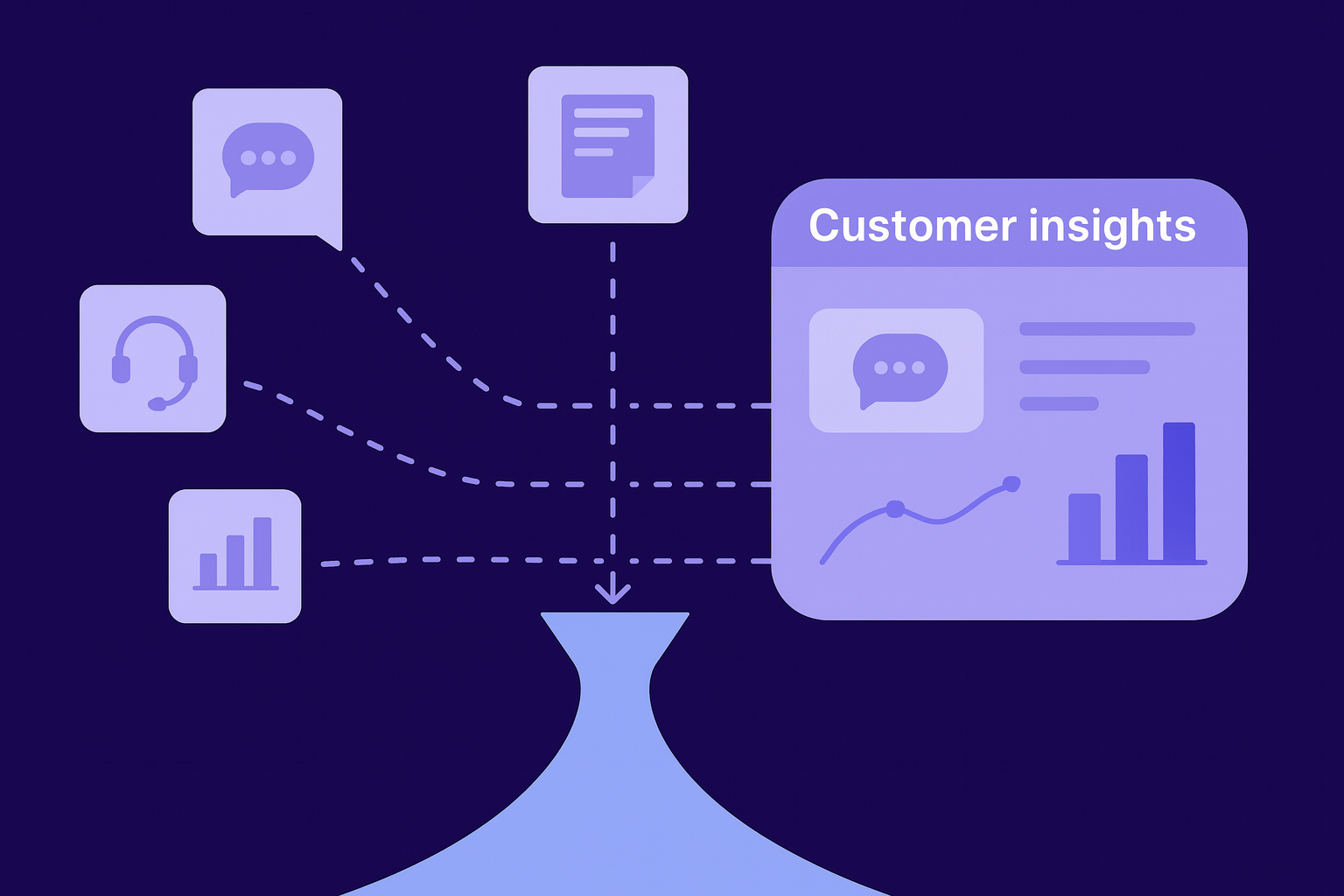
One of the most powerful effects of centralized customer insights is alignment. When product, sales, customer success, and leadership all reference the same source of customer truth, conversations change.
Instead of debating opinions, teams discuss evidence. Instead of siloed interpretations, there is shared language and context. Timebook makes customer insights accessible and understandable across functions, ensuring that the voice of the customer informs decisions at every level. This shared understanding reduces friction, accelerates decision-making, and builds confidence in product direction.
Customer insight only delivers value when it influences action. Timebook helps PMs connect feedback directly to roadmap initiatives, feature prioritization, and problem statements.
Rather than vague justifications, PMs can point to concrete customer evidence behind every decision. This strengthens product narratives, improves stakeholder buy-in, and ensures that development effort is focused on solving real problems.
Over time, this creates a virtuous cycle where customer feedback continuously informs strategy, and strategy is validated through ongoing customer conversations.
Unlike traditional customer insight platforms, Timebook is designed for speed, clarity, and real-world workflows. It emphasizes qualitative depth without sacrificing scalability, and it prioritizes usability for PMs rather than analysts.
By capturing insights automatically, synthesizing them intelligently, and making them accessible across teams, Timebook enables a level of customer understanding that static tools struggle to achieve.
This is not just about collecting more feedback, it’s about building better products through deeper understanding.
Centralizing customer insights is no longer optional for product teams that want to compete. In a fast-moving market, the ability to listen, learn, and adapt quickly is a decisive advantage.
Timebook helps PMs move beyond fragmented tools and manual synthesis toward a unified voice of the customer. By turning everyday conversations into centralized product insights, it empowers teams to make confident, customer-driven decisions, consistently and at scale.
If you’d like to go deeper into how timebook.ai captures insights from real customer conversations, then book a demo here: